

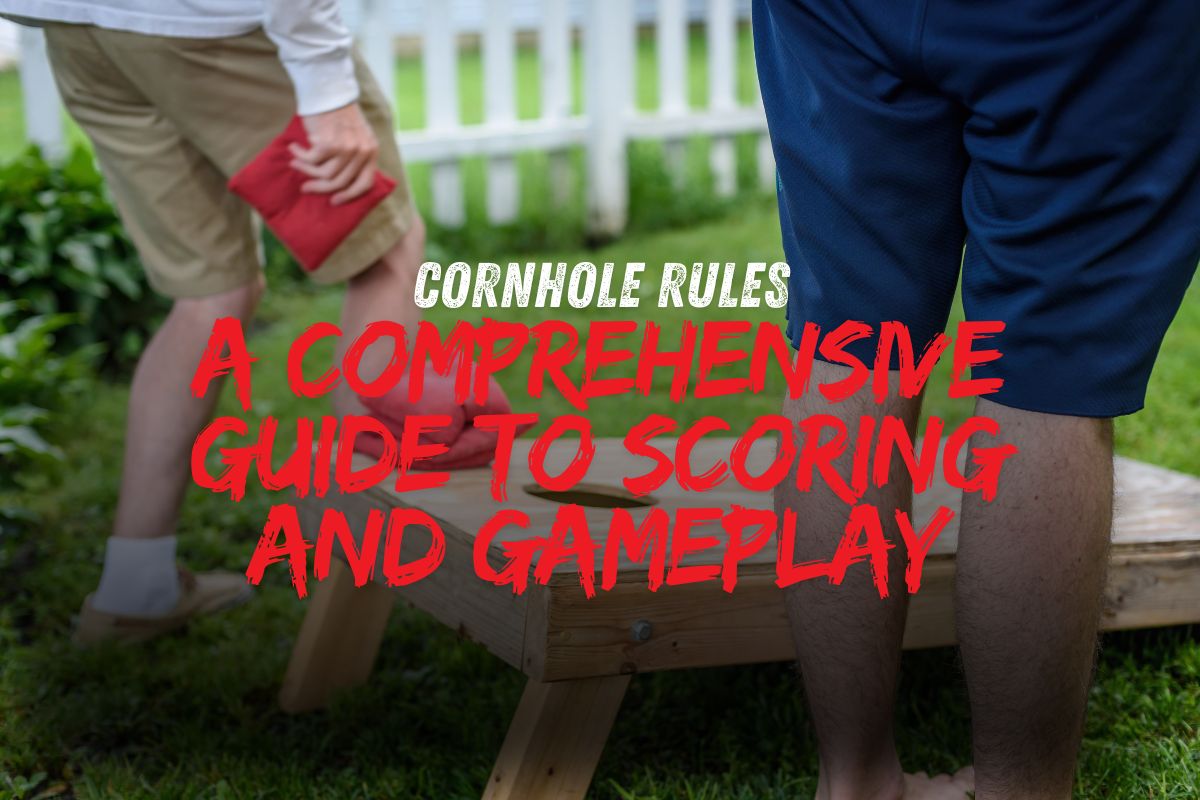
Cornhole is a timeless lawn game that’s played across the United States and beyond. Whether you’re at a tailgate, a family gathering, or a professional tournament, understanding the cornhole rules is essential to enjoying the game. This guide will walk you through the cornhole game rules, how to score in cornhole, and the official rules for competitive play.
Whether you’re a beginner just learning how to play or a seasoned player preparing for a tournament, this detailed explanation will ensure you’re fully prepared for your next match.
The Basics of Cornhole: Understanding the Setup and Objective
Before diving into the specific cornhole rules, it’s important to understand the basic setup and objective of the game. Cornhole is typically played outdoors with two boards and four bags per player or team. The primary goal of the game is to get your bags into the hole of the cornhole board to score points.
Cornhole Board Dimensions and Setup
- Dimensions: Each cornhole board measures 48 inches long by 24 inches wide.
- Hole Size and Placement: The hole is 6 inches in diameter and is positioned 9 inches from the back of the board and 12 inches from each side.
- Height: The front of the board is 3-4 inches off the ground, and the back is 12 inches off the ground.
- Distance: The official distance between boards is 27 feet for adult play, but this can be adjusted for younger players or casual games.
The Objective of the Game
The goal of cornhole is simple: players or teams take turns throwing bags filled with corn (or beans) at the board. Points are scored by either landing the bag on the board or putting it through the hole.
Cornhole Game Rules: How to Play
Understanding cornhole game rules ensures that you can play the game fairly and with full enjoyment. Here’s a breakdown of the gameplay and how to follow the official cornhole rules during a match.
Setting Up the Game
- Board Placement: Position two cornhole boards 27 feet apart for adults (this distance can be reduced for kids).
- Teams: Cornhole can be played with two players (singles) or four players (doubles).
- Starting the Game: A coin toss or a similar random method is used to decide which player or team goes first.
Gameplay Flow
- Players alternate throwing their bags at the cornhole boards, aiming to either land them on the board or get them into the hole.
- Each player or team has four bags per round, and the goal is to score as many points as possible in each round.
Cornhole Scoring Rules: How Points Are Awarded
The cornhole scoring rules can seem a bit tricky at first, but they’re straightforward once you get the hang of it. Here’s how to score in cornhole:
Points Per Bag
- In the Hole: A bag that goes completely through the hole scores 3 points.
- On the Board: A bag that lands and stays on the board scores 1 point.
- No Points: If the bag misses the board or falls off, it scores 0 points.
Cancellation Scoring
In cornhole, points are calculated using a cancellation scoring system. This means that only the bags that remain on the board (or in the hole) after both teams have thrown their bags count toward the final score. Here’s how it works:
- After both teams have thrown their bags, the points are calculated for each team.
- The team with the highest score in a round wins the points for that round, but the opposing team’s points are subtracted.
- For example, if one team scores 3 points (one bag in the hole) and the other team scores 1 point (one bag on the board), the final score for the round is 2 points for the team that scored 3, as the 1 point is canceled out.
Winning the Game
A game of cornhole is typically played to 21 points, but the score must be reached exactly. If a team exceeds 21 points, their score resets to the nearest score below 21.
Example of Scoring:
- Team A scores 5 points (two bags in the hole) and Team B scores 7 points (three bags on the board and one in the hole).
- Team A’s score is canceled out by Team B’s, and Team B wins 2 points for the round.
Official Rules for the Game of Cornhole: How to Play Like a Pro
Now that you understand the basic cornhole rules and scoring, let’s look at the official rules, particularly for tournament play.
Cornhole Board Regulations
For tournament play, the boards must meet specific cornhole board dimensions and surface requirements:
- Surface Material: Plywood or high-quality wood is typically used for the playing surface.
- Hole Dimensions: The diameter of the hole must be 6 inches, with a uniform edge to ensure consistency.
- Board Slope: The board must be slightly slanted with the back being 12 inches higher than the front.
Cornhole Bag Regulations
- Bag Size: The official size of a cornhole bag is 6 inches by 6 inches.
- Weight: Each bag must weigh between 14 and 16 ounces.
- Material: Traditional cornhole bags are filled with corn kernels, although many are made with synthetic materials.
Number of Bags
In most professional tournaments, each player or team is given four bags to throw in a round.
Tips for Playing Cornhole Like a Pro
While the cornhole rules are simple, becoming a skilled player takes practice and strategy. Here are some tips to help you improve your cornhole game:
1. Master Your Throwing Technique
The key to success in cornhole is having a consistent throwing technique. Practice your throw to ensure that you can land the bags in the hole or on the board with accuracy. There are different ways to throw the bag, but the most common technique involves tossing it with a slight arc.
2. Understand the Strategy Behind Scoring
In cornhole, your strategy will depend on whether you’re playing offensively or defensively. If you’re ahead, you’ll want to block your opponent’s shots by placing bags in front of the hole. If you’re behind, you’ll want to make high-risk shots that can land directly in the hole for higher points.
3. Practice Regularly
Like any game, practice is essential to improving your cornhole skills. Set up the boards in your backyard and practice with friends or family members regularly. This will help you develop better control over your bags and improve your accuracy.
Common Mistakes and How to Avoid Them
Even seasoned players can make mistakes while playing cornhole. Here are some common errors and how to avoid them:
- Throwing Too Hard or Soft: Throwing the bag too hard can cause it to miss the board entirely, while throwing it too softly can make it fall off the board.
- Not Following Official Rules: In official games, always be sure to adhere to the cornhole board dimensions, the weight of the bags, and the scoring rules. Small deviations from the official rules can result in penalties or disqualification.
- Misjudging Wind or Weather Conditions: Since cornhole is typically played outdoors, be aware of how wind or weather can affect your throws.
Conclusion: Mastering Cornhole Rules for a Fun and Competitive Game
Whether you’re playing for fun or in a competitive environment, understanding the cornhole rules, cornhole scoring rules, and the rules for the game of cornhole is crucial to success. The key to mastering cornhole is practice, strategy, and maintaining consistency. With this guide, you’re now equipped to play like a pro, whether you’re at a tailgate party or competing in a national tournament.
So grab your boards, round up your friends, and get ready for a fun-filled game of cornhole!